Measured comparison
upscaler.ir vs Nano Banana Pro
Google's Nano Banana Pro keeps a photo better than most editors, but it still regenerates the image and picks the output size itself.
Visual comparison


Drag the divider: one side is Nano Banana Pro, the other upscaler.ir Pro, both from the same small input.
The same spot, up close
Each crop is the same spot in every model's output. “Original” is what should have been recovered.
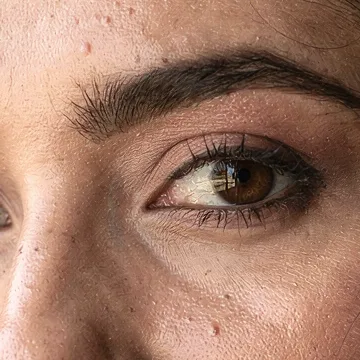 Original
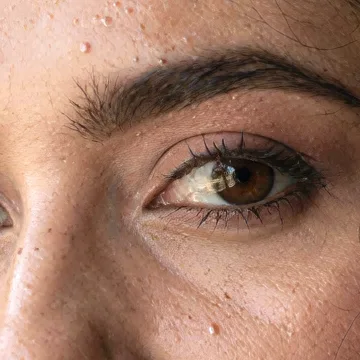 upscaler.ir Pro
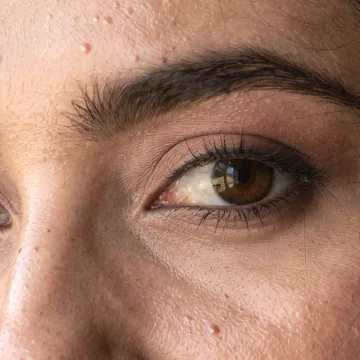 upscaler.ir Free
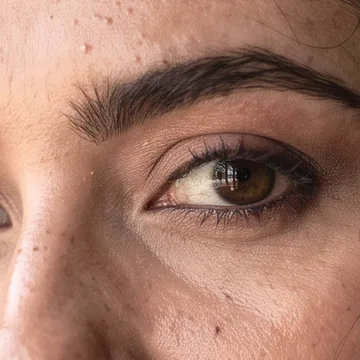 Nano Banana Pro
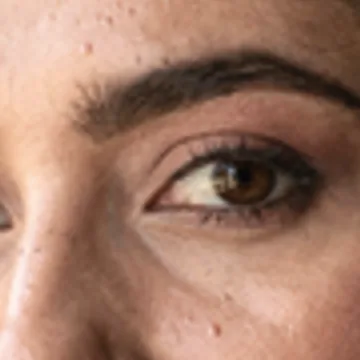 Plain resize
What we found
- Nano Banana Pro stayed closer to the original than GPT Image, but rebuilt less fine detail than upscaler.ir and left it softer.
- Its output wasn't exactly 4× (2400×1792 instead of 2048×1536); upscaler.ir gives exactly the factor you choose.
- Nano Banana Pro tops out around 4K; upscaler.ir goes up to 64 megapixels.
When to use Nano Banana Pro
For text-driven edits, combining photos or making new images, Nano Banana Pro is a good choice.
When to use upscaler.ir
To enlarge the photo itself, without changing faces or details and at an exact size, use upscaler.ir.
Try a photo freeThe numbers
We had the original of every photo, so outputs could be measured against the truth, not taste.
| Photo | Model | Faithfulness (dB) | Detail | Time | Output size |
|---|---|---|---|---|---|
| Portrait | upscaler.ir Pro | 40.7 | 0.87 | 28 s | 1536×2048 |
| upscaler.ir Free | 38 | 0.89 | 14 s | 1536×2048 | |
| Nano Banana Pro | 35.3 | 0.91 | 31 s | 1792×2400 | |
| Plain resize | 42.7 | 0.47 | — | 1536×2048 | |
| Snow leopard | upscaler.ir Pro | 30 | 0.76 | 26 s | 2048×1536 |
| upscaler.ir Free | 29.2 | 0.82 | 14 s | 2048×1536 | |
| Nano Banana Pro | 22.9 | 0.89 | 35 s | 2400×1792 | |
| Plain resize | 32.4 | 0.43 | — | 2048×1536 | |
| Hand-knotted carpet | upscaler.ir Pro | 29.5 | 1 | 16 s | 2048×1536 |
| upscaler.ir Free | 29.4 | 0.99 | 14 s | 2048×1536 | |
| Nano Banana Pro | 25 | 0.76 | 33 s | 2400×1792 | |
| Plain resize | 33.3 | 0.54 | — | 2048×1536 |
- Faithfulness (dB)
- We shrank each output back to the input size and compared it with the input (PSNR). Higher means the model kept the photo instead of moving or changing things.
- Detail
- Fine-detail energy relative to the original. 1 means as detailed as the real photo; lower is blurry; well above 1 means detail was invented.
How we tested
- We made three 2048-pixel photos (a face, an animal, a carpet) so we had the exact original.
- We shrank each one 4× (384–512 px) and gave that same small version to every model.
- Each model ran once, with no cherry-picking. The general editors got one fixed prompt.
- We resized outputs to the original's size and measured faithfulness and detail.
Prompt given to the editors: Upscale this photo to a higher resolution. Keep it exactly the same photo: same composition, framing, colors, faces, textures and every detail in the same place. Only restore sharpness and fine detail. Do not add, remove, restyle or reinterpret anything.
Three photos is a small sample, and they were AI-generated so the original is known. Read the results as a guide to how the models behave, not a final verdict.
Loupe: pixel for pixel

